Where the Northeast Kingdom meets the Eastern Townships
Good land, asking a better question.
140 acres of fields, woods, wetlands, streams and river — a former dairy farm with an old farmhouse and a big old barn. We're turning it into a place for union, growth and celebration. It begins, of all things, with bees.
The land
Most of what a farm needs is already here.
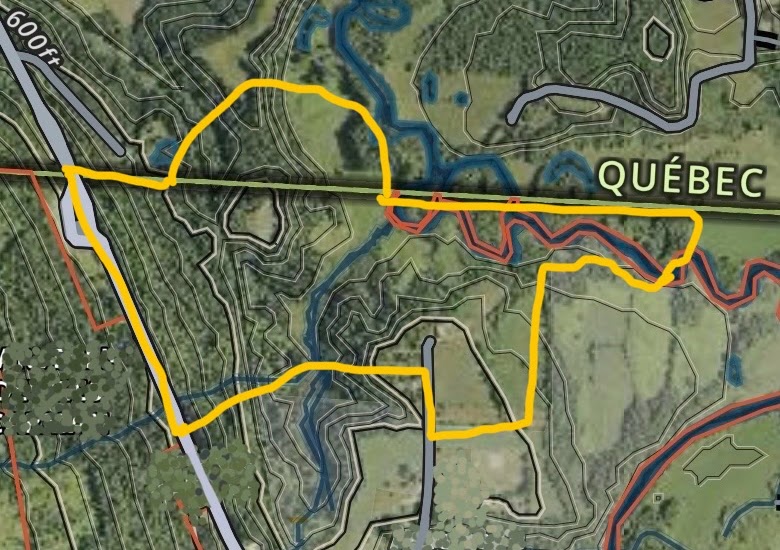
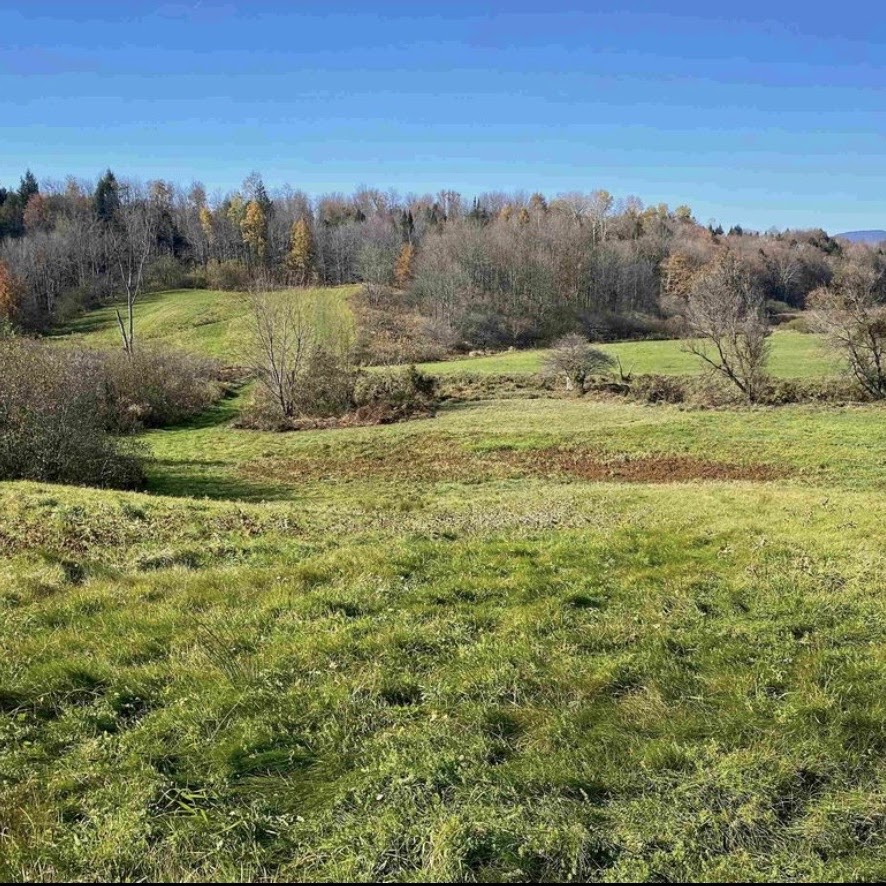
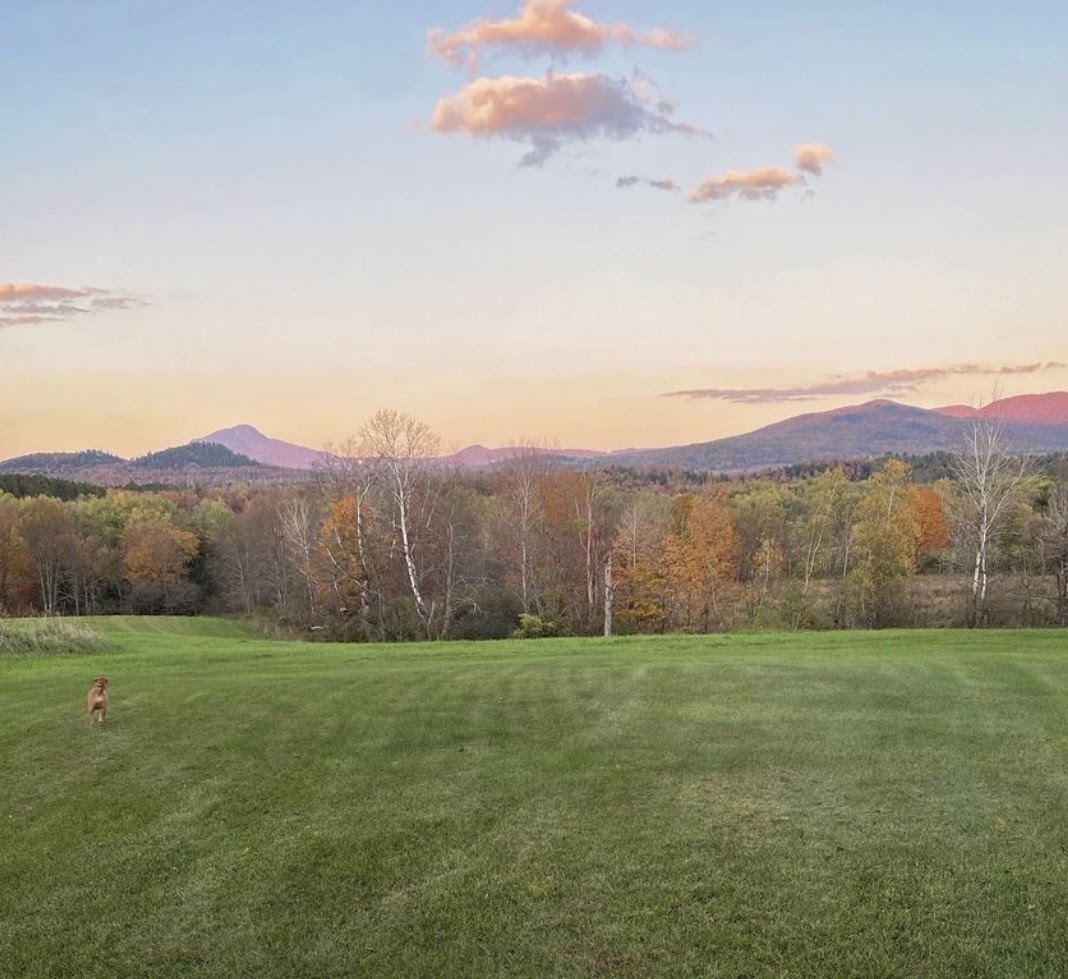
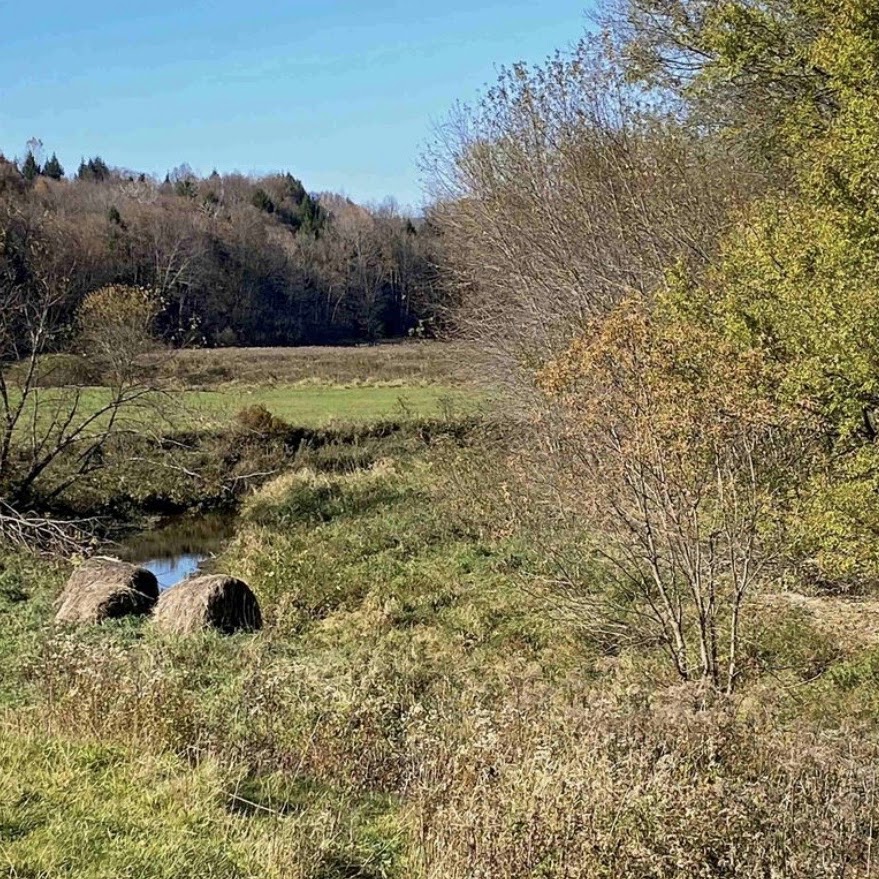
Several large flats, wooded edges, wetlands, a few streams and a large river. It was a dairy farm in a previous life. The zoning allows more houses and structures to be built or brought in, connected to municipal water and sewer. There's a zoning process, of course — permits, hearings, patience — and everything we're imagining sits within the limits.
It needs love. That's the invitation, not the disclaimer.
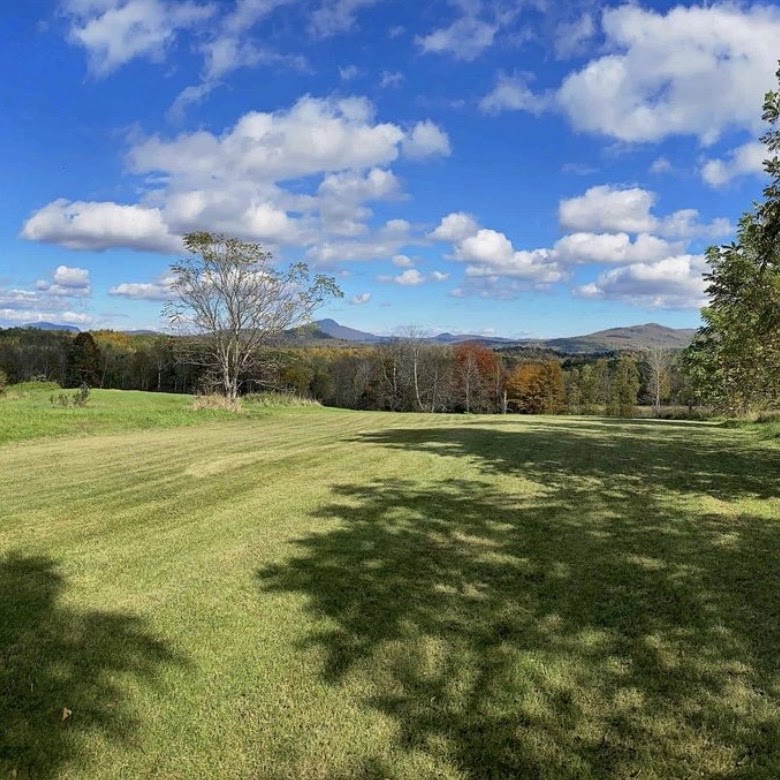
- Open flats — the level ground that market gardens, orchards, a hayfield — and homesites — want.
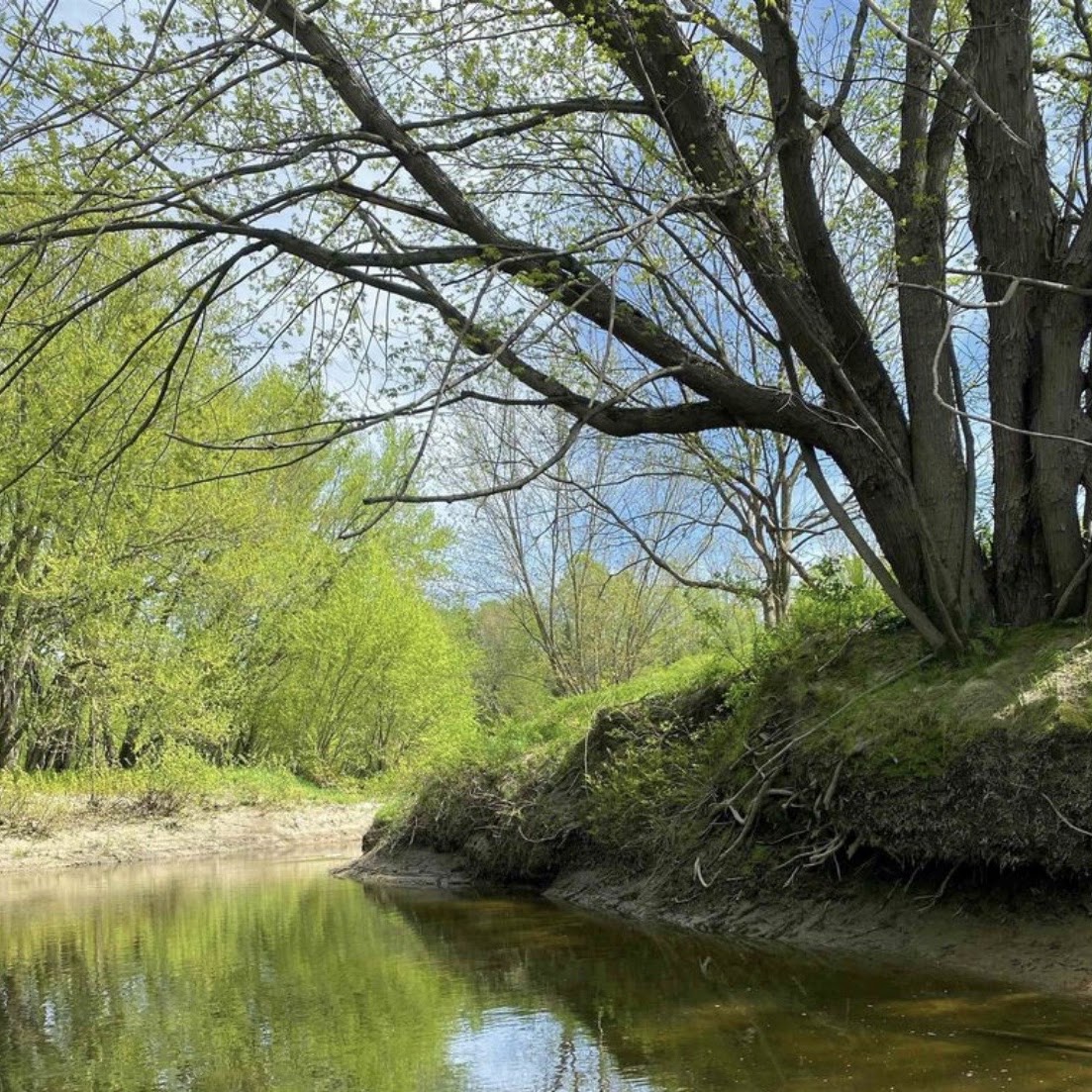
- Water everywhere — streams, wetlands and river. Irrigation, and forage that stays green in August. No ponds yet — very possible, very much wanted.
- Woods & edges — firewood, timber, sugarbush potential, mushrooms, and windbreak for the hives.
- A big old barn — storage, workshop, packing shed, and one day a room with a floor good enough to dance on. We'd like a second barn too — there's room for it, and a use for it.
- A line on a map — a connecting parcel in Canada, which is either a complication or the whole point. You decide.
Where it starts
We start with bees.
Not because it's charming. Because bees are the simplest, fastest way to learn a piece of land — what blooms and when, where the water sits, which flat holds the morning sun, where the wind comes from in February. A hive is a survey instrument that pays you in honey.
Local beekeepers wanted
We're looking to connect with keepers in the NEK and just over the line who'd like to put hives on good, unsprayed ground. You bring the bees and the knowledge. We bring the forage, the water, the winter windbreak, the fencing and the hands.
A few hives, honestly done
Two to four colonies to begin — sited together on a south-facing flat with an east-facing entrance and water within reach. Split the honey however feels fair. Teach whoever shows up. If it goes well, we grow it; if it doesn't, we learned the land anyway.
Then plant for them
Bees set the planting plan: clover and buckwheat in the flats, willow and basswood at the edges, fruit trees where the frost drains, goldenrod and aster left standing for the late flow. Feed the hive and you've fed everything else too.
Beginners welcome as helpers. Experienced keepers especially welcome as teachers.
Growing
Food is the argument this place makes best.
Start small and real: a few beds that actually get weeded, a cellar that actually gets full. Grow toward feeding residents first, then neighbors, then the market shelf. There's already a home for the surplus — a cafe and market thirty minutes away in Barton, in a three-story building being brought back to life by the same family of projects.
Market gardens
Intensive beds on the near flat — greens, roots, alliums, brassicas. Close enough to the kitchen that they get looked at every single day.
Fruit & perennials
Apples, plums and pears where cold air drains away; berries, rhubarb, asparagus, herbs. The slow layer that will outlast all of us.
Ferment & pickle
Lots of it. Kraut, kimchi, hot sauce, brine, vinegar, kvass — a cellar of crocks is how a short season becomes a long one.
Animals, modestly
Chickens for sure. Maybe more, once there's someone here every morning who genuinely wants to do the chores.
An outdoor kitchen
Indoor/outdoor, fire and shade, long tables. The first structure worth building, because everything else gets decided around it.
Honey & the shelf
Honey, ferments, baked goods and produce onto the market shelf in Barton — alongside other local growers and makers.
Celebration
And then, at some point, a party the size of a field.
Here's the honest version: we don't know what it is yet. An annual gathering, once a year, at the end of the growing season — that much feels right. Music, almost certainly. Beyond that it's an open question, and we'd rather ask it out loud than answer it alone.
One stage, or none?
A hayfield, a barn, a treeline that does the acoustics for free. Live sets, DJs on a dancefloor of grass, sound journeys at dusk, ecstatic dance at sunrise.
A harvest, not a lineup
Everything served grown or made within sight of where you're standing. Bread, ferments, honey from hives you can walk to. The menu is the program.
Two countries, one weekend
A parcel on each side of the line is an odd, wonderful premise for a celebration about union. We're curious what it could mean. Tell us.
Small first
Year one might be forty people, a fire and someone's fiddle. That's a good year one. Bring us the version you'd drive four hours for.
Musicians, producers, sound people, cooks, builders of temporary beautiful things — send us the idea.
Come stay
WWOOFers, wanderers, and people who finish things.
We're opening the gate to WWOOFers and other working visitors — a season, a month, a long weekend. If you want to learn hives, build a kitchen, plant an orchard or run a ferment cellar, there is more than enough here to learn on.
This isn't a hunt for free labor: visitors and residents are paid for work. A few minimal weekly volunteer duties are shared by everyone, residents and non-residents alike. All ages — kids and elders welcome. Part-time or full-time.
Where you'd sleep
The Spartan campers
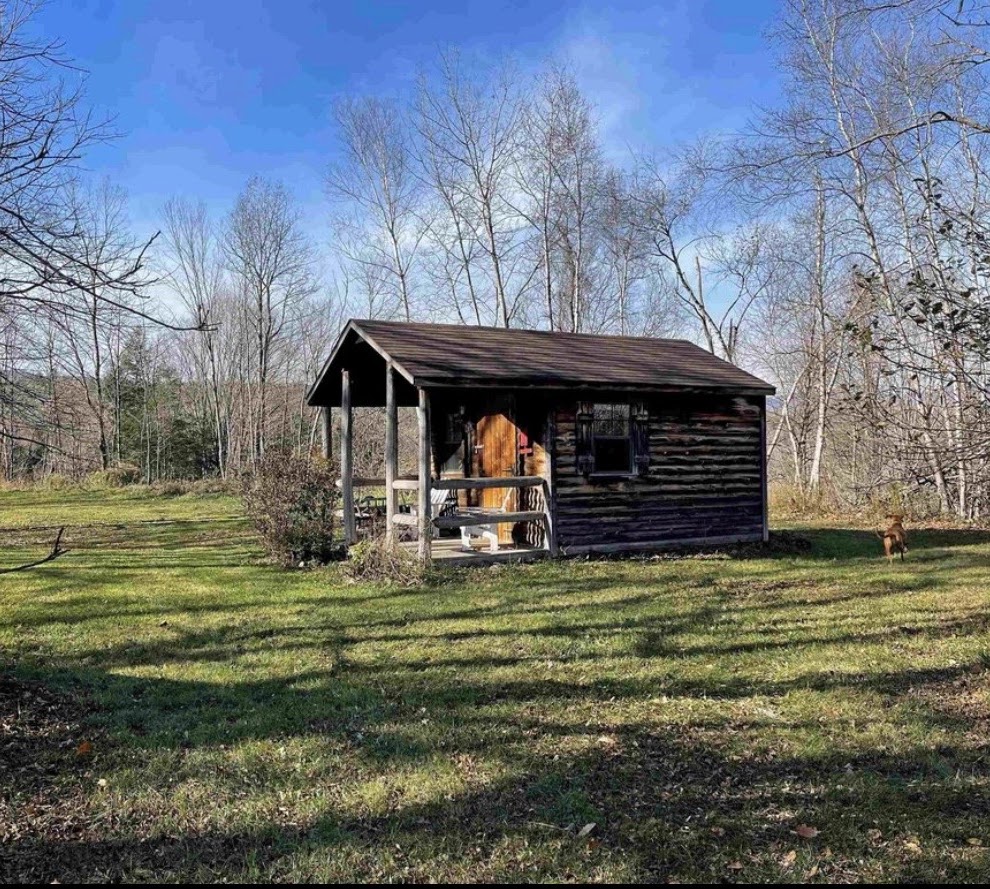
Several of them on the property — all dry and solid, in varying states of finish. If you're handy, pick one and turn it into a cozy little home. Long-term living possible.
Bring your own
RV, van, mobile tiny house, or a tent in a field you get to choose. Immobile homes become possible later.
Shared farmhouse
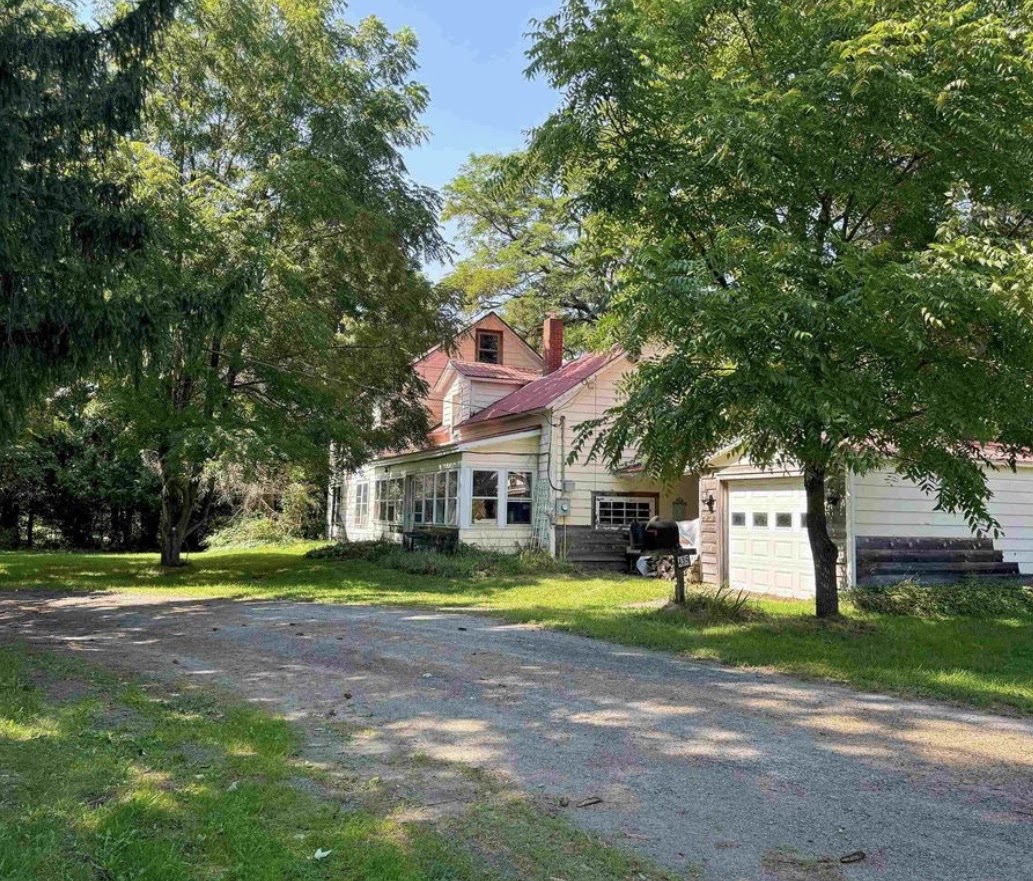
The kitchen and bathroom in the old farmhouse are shared. Outhouses and a sauna are on the build list — possibly by your hands.
Skills we'd love on the land
Not a checklist. Bring one, bring none, suggest something we forgot.
- Beekeeping
- Food gardening
- Fruit tree planting
- Fermenting (lots)
- Carpentry
- Plumbing & electric
- Land sculpting
- Heavy machinery
- Solar & hydro systems
- Aquatect (waterways, water features)
- Tending animals
- Cooking & food prep
- Retail baking
- Coffee roasting & barista
- Pottery & ceramics
- Somatic practice, yoga, dance
- Sound journeys & music
- Filmmaking
- Event production
- Governance & bylaws (sociocracy)
- Business development
- Bookkeeping
- Project management
- Something we forgot
How it's held
Long term, the project owns the land — not a person.
I just got the property, so this is genuinely the beginning. I'm not a stranger to community projects — including their pitfalls. I don't have all the answers; I have some ideas and a lot of questions.
What I do believe: the land should end up owned by the project rather than by any single person, and that this can be achieved regardless of the financial gaps between the people who live and work here. Getting there is a design problem we solve together — governance, bylaws, sweat, patience.
— Michael Kunitzky, founder. More background ↗
The family
CanadUS is one of four projects run on the same method.
Curiosity, critical thinking, community action — a Vermont non-profit, a village building, a literacy campaign, and this land.
Non-profit · Vermont
Curioso Corp ↗
The organization behind all of it. Ask the better question, then go do the small physical thing.
Barton, VT · in progress
Neighbors, 424 Main ↗
A three-story former bank: cafe and market on one, co-working on two, an old ballroom on three. Home for what this land grows.
US & Canada · campaign
Books Across the Country ↗
A free book a month for every child under five, funded by governments rather than families. Two minutes to send.
Software · in development
Feedback Loop ↗
Honest, anonymous feedback — so people say the true thing instead of the safe one.
Get in touch
Curious? Be in touch.
Whether you keep bees, grow food, build things, cook, play music, or just want to walk the land and ask what it could be — write. Tell us what you'd want to do here, and roughly when.
Write to us
info@curiosocorp.org